
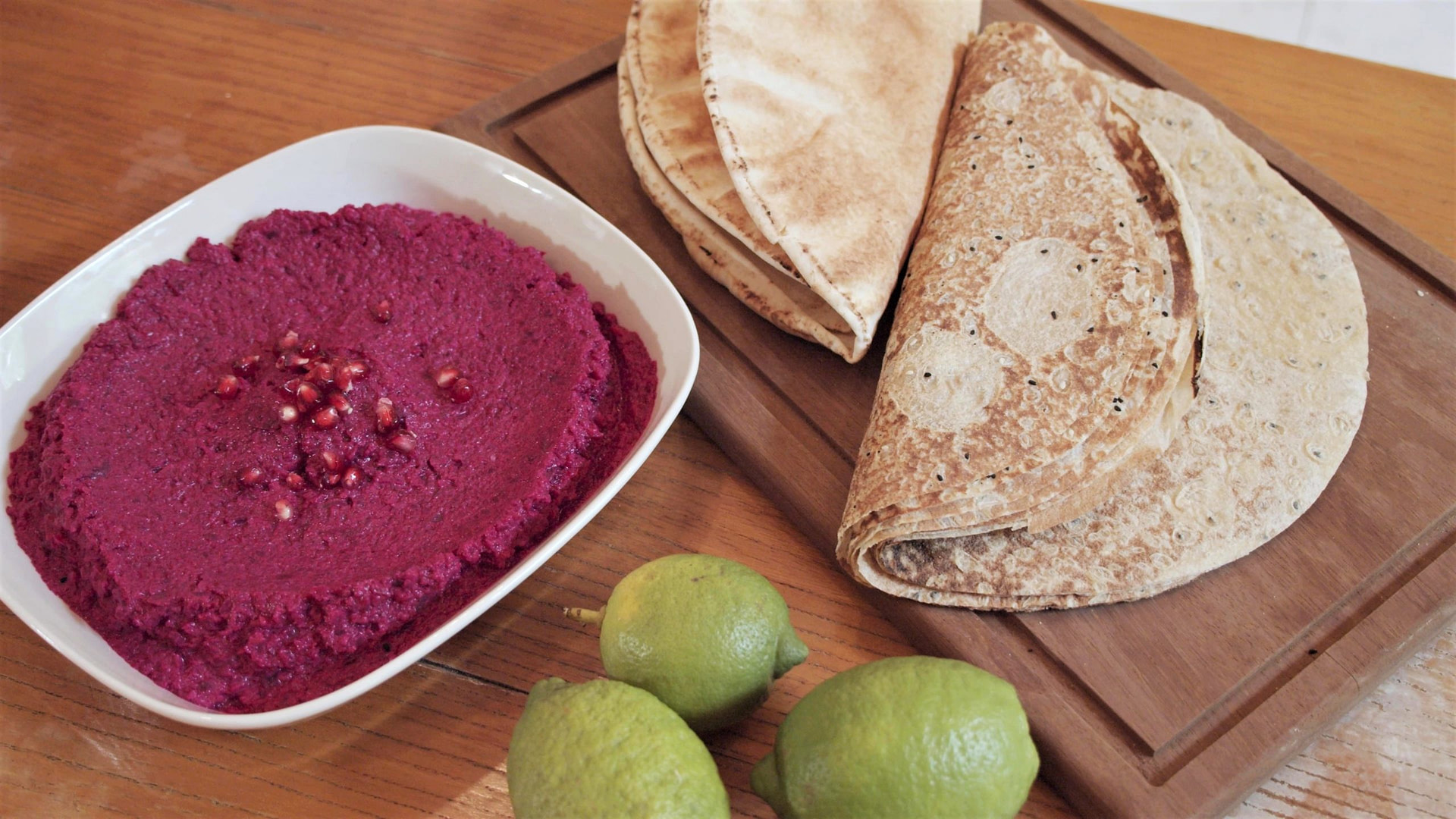
Joumana Accad is a chef and blogger (www.tasteofbeirut.com). She grew up in Lebanon and has been living between Beirut and Dallas, Texas, for 30 years. She did us the pleasure and honor of welcoming theUrsino team to her home in Deir El Qamar, in the heart of Lebanon's Chouf region, to share with us her culinary traditions and, more specifically, a dish from the mezze repertoire: beetroot hummus.
How did you get this recipe? From whom?
Kameel Abu-Hatoum, an expert in traditional Lebanese cuisine from Baakline in the Chouf Mountains, generously shared this recipe with me. He nicknamed it "mama dallou'ah." The name is a nod to the famous baba ganoush. In fact, "baba" means dad and "ganoush" means "cuddle" (or someone who loves to pamper and cuddle their child or loved one). "Mama" means mom and "dallou'ah" means a mother who loves to be pampered, loved, cherished, and cuddled. This delicious dip is eaten at room temperature, served with pita bread. It is very easy to prepare and can be adjusted to taste by changing the amounts of lemon, garlic, or tahini (sesame paste).
The idea of calling this dish "Mama dallou'ah" is amusing, but it has not been officially adopted. In Lebanon, this dish is called "mtabbal el shmandar." "Shmandar" is the Lebanese word for beetroot, and "mtabbal" means "something that is seasoned." It is used for hummus, eggplant, cauliflower: mtabbal hummus, mtabbal betenjane, mtabbal arnabeet, as well as for meat: falafel, kafta, and baked fish. In short, for everything!
Is it a rather old recipe? Is it linked to a particular region?
Yes, you could say it's an old recipe, a traditional one.
Tarator is a sauce that forms the basis of all seasonings. It's a bit like French crème fraîche and also acts as a vinaigrette. All cooked vegetables are seasoned with this sauce made from tahini, lemon, garlic, and sometimes herbs.
It's a dish that is common throughout Lebanon.
Do you know any other variations of this dish?
Just a technical note: many chefs and restaurants serve beets cut into small pieces, others serve them puréed and mixed with tarator, and still others grate them.
Armenians also make a sweet version and use it as a filling for a bread eaten in the morning called Tahinov Hatz (find the recipe on Joumana's blog).
What does this dish remind you of? Do you have any memories or stories related to it?
I wrote a little book on Iraqi cuisine (published in Arabic) and learned from Iraqi friends that in their cuisine, they drink beet juice (or broth) with a dash of bitter orange juice and sugar to taste. It's delicious and healthy, and since then I've loved drinking the broth after cooking beets for this dish!
Any final thoughts?
Yes! I completely agree that cooking is an excellent way to communicate between people from different cultures, because it's not a "sensitive" subject and can even bring people together. You can even start with children. So, I support your efforts and wish you continued success around the world!
The recipe for beetroot hummus
Ingredients:
- 700 g of beetroot
- Tarator sauce:
- 1/2 cup tahini
- 1/2 glass of water
- 1/3 cup of lemon juice
- 2 or 3 cloves of garlic
- salt
Steps:
- Peel the garlic and chop it into small pieces.
- Add a spoonful of salt, then mash until you obtain a creamy paste.
- Pour half of the tahini into a container.
- Add a generous spoonful of garlic, then mix with a mixer.
- Pour in the lemon juice gradually, mixing as you go.
- Dilute with 1/2 glass of water
- Pass the beets through a food mill to turn them into purée.
- Season the beets with the tarator sauce prepared in the previous steps, then mix until you obtain a fuchsia pink color.
- Enjoy with pita bread and sahten*! *Bon appétit!