
As part of our Ursino project, each month we invite you to discover a traditional recipe shared by a chef, a celebrity, or an anonymous contributor.
Discovering a dish, its history, how it is eaten, and even the memories associated with it is precisely what our students around the world do. Based on this, they conduct research to discover the origins of dishes and their ingredients.
The goal: for them to discover for themselves that our cultures, particularly our culinary cultures, have always been enriched by diversity and encounters between peoples.
Originally from Saint-Mathurin-sur-Loire, Mamie Denise kindly shared with us the recipe for traditional Anjou rillettes, along with her ancestral know-how. A recipe passed down from generation to generation.
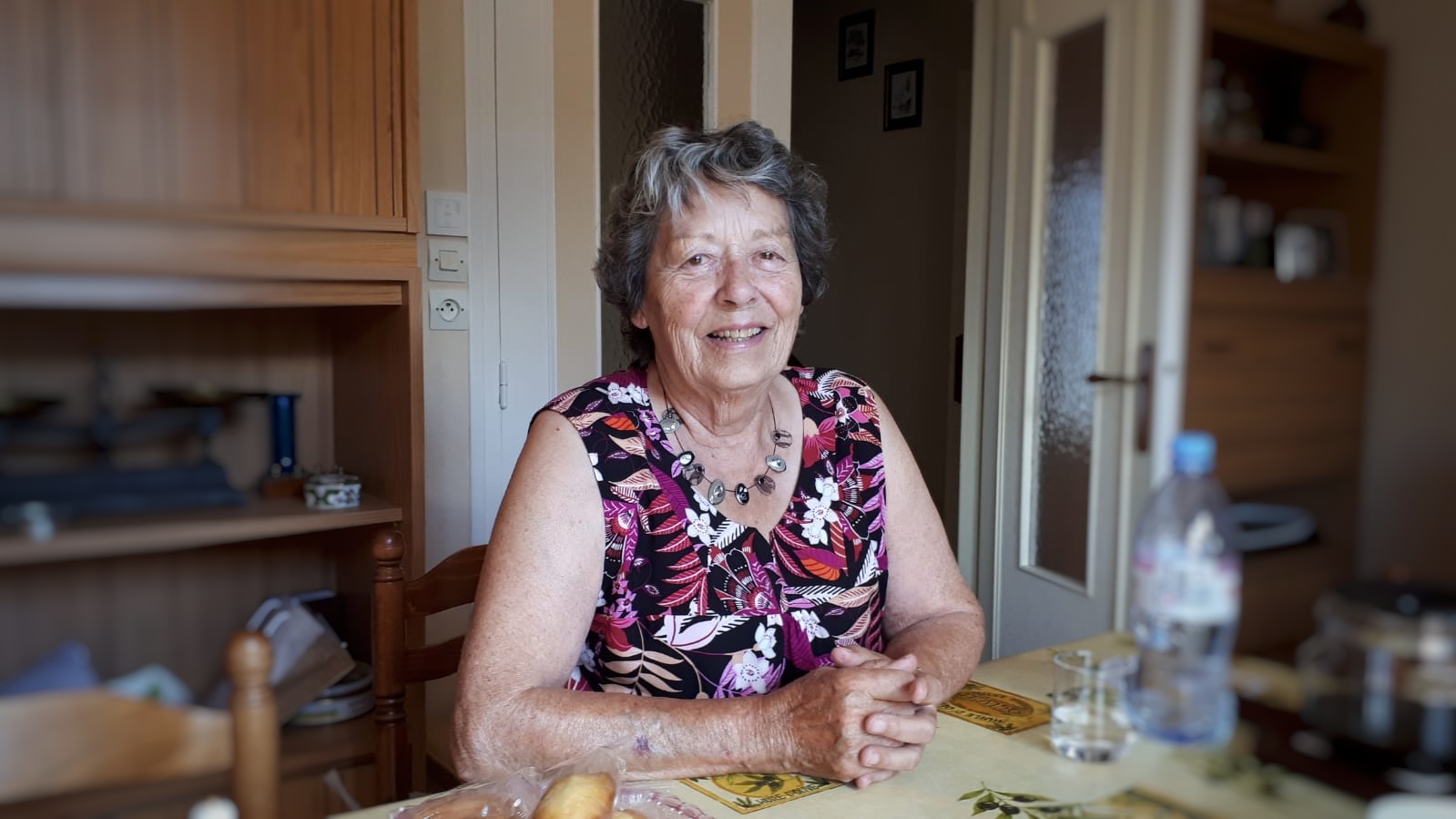
Tell us about a traditional recipe that is close to your heart...
"Everyone used to make rillettes! The recipe consists of cooking pieces of pork from the fatty parts, small pieces of bacon that were placed in a cauldron over the fire. They were left to cook, and during cooking, pieces were removed to make rillauds. The rest was left to simmer for several hours to make rillettes."
Who prepared this dish? How was it passed down to you?
"I didn't make any, but my parents did. Pierrot (editor's note: her husband) made some here too, in the garage. We were sick of the smell of grease by the end of the day! [laughs]
In the past, in Anjou, everyone did this in their families. When we slaughtered a pig, we used everything: we made ham, blood sausage, and rillettes, of course! The ham and blood sausage were stored in the fireplace. They took on a delicious smoky flavor—it was excellent! And the rillettes were put in jars. As the fat rose to the surface, it kept well, and we didn't even need to sterilize the jars. And it kept like that, from one year to the next.
Father Tiercelin gave me the recipe. He had a farm. My mother used to work for him, looking after his children. In fact, he gave the recipe to my mother, and I got it when I was about 18 years old.
What does this dish remind you of? Do you have any special memories or stories associated with it?
"When I was little, we used to have evening gatherings in winter. We would go with our parents, sometimes neighbors, to friends' houses or farms. From 9 p.m. to midnight, we would play cards, sort beans, chat... Then we would have a snack of fresh bread and rillettes, ham, and blood sausage. And we would walk home arm in arm, singing songs we had learned at school or bawdy songs that the older folks had taught us! We didn't have TV back then, it was very different!"
Does this dish seem rather old or recent to you? Is it disappearing? Which region do you think it belongs to?
"Oh yes, it's an old recipe! I don't think it's disappearing, but now not many people make rillettes themselves, only butchers make them. And now we eat it in moderation, whereas before we ate it all the time! Now we're told not to eat this, not to eat that... But rillettes eaten like this with fresh bread are a real treat! And we used to cook back then, I feel like that's being lost."
Do you know of any other variations of this dish? Or similar dishes in other countries or regions?
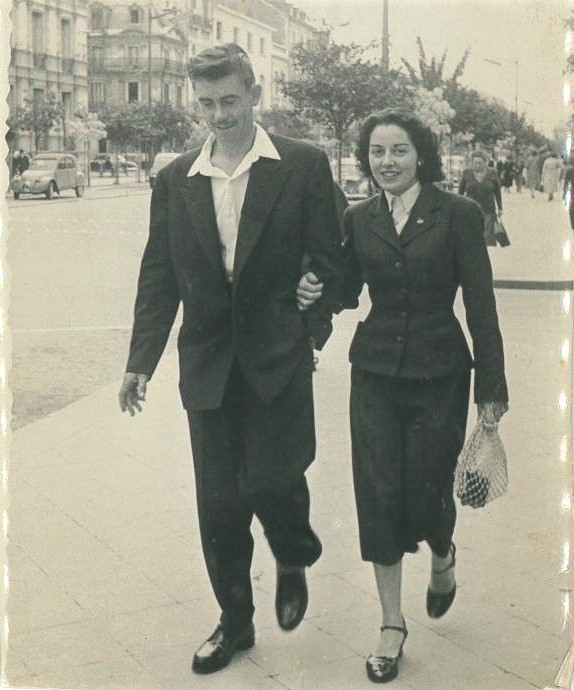
"Not really. There must be some, but I don't know them. Well, yes, there are rillettes from Le Mans, but other than that, I don't know. It's really typical of Anjou, that's for sure!"
How and when is this dish usually eaten?
"Oh, just like that, with fresh bread. Baguettes or large slices of the big loaves they used to make. Rillettes are eaten as a starter, or as a snack in the evening when we went out. We ate rillettes more often than pâté."
Are there any other traditional dishes that you are keen to pass on to your children?
"We used to make pot-au-feu a lot! It was great for a large family. We would fill the pot with vegetables and serve it with a vinaigrette dressing. It fed everyone! And then cheese! We mostly ate Camembert when I was young. No cheese platters—they were far too expensive."
What do you associate with cooking and mealtimes? Why do you think this is important in a culture or society?
The recipe for Anjou rillettes
Ingredients:
- Piece of pork (bacon, shoulder, ham hock, etc.)
- Pork fat (or lard)
- 10 g of salt per pound of meat
- Water
Optional :
Kidneys, spleen, pieces of pork belly (for making rillauds)
- If you are making a small quantity, use a saucepan or a large pressure cooker.
- If you are making a large quantity, use a well-cleaned cast iron pot.
You can cook kidneys and spleen with your rillettes (cooking time: 3 hours), as well as rillauds taken from the side of the pig and ham hocks (cooking time: 4 hours). The meat is done when it slides off the fork.
Steps:
- Take a piece of lard or suet and rub it around the bottom and sides of the chosen container.
- Cut all the fat into 1-2 cm pieces. Melt it in the container.
- Cut up all the remaining meat and add it to the pot. Salt the top of the meat with 10g of salt per pound and add, depending on the amount of meat, 1 to 2 liters of water, taking care to pour it next to the meat so that the salt does not fall to the bottom of the pot. This water will evaporate at the beginning of cooking and allow time for the fat to melt properly.
- Keep a close eye on the cooking, especially at the end. Stir frequently at the beginning and end. The rillettes must not stick to the bottom.
- Cook for 4½ to 5 hours.
- 1 hour before the rillettes are done cooking, put a little on a plate, let it cool, then taste it to see if it is salty enough. If so, leave it. If not, add 2 glasses of simmering water in which you have dissolved salt. Be careful not to empty the bottom of the pan! Under no circumstances should you add undissolved salt to the hot rillettes.
- Once cooked, allow the rillettes to cool, then crumble them. Place them in jars or pots and cover with a layer of fat that you have melted down if necessary.
Bonus
What is your Proustian madeleine?
When I went to my grandmother's house on Sundays, there was always rabbit simmering on the stove. But I think my Proustian madeleine is actually the breakfast I had when I went there! My grandfather baked his own bread in the oven in the bedroom, so in the morning we were treated to large slices of toast that we put in the toaster, which was placed in front of the fireplace. It smelled wonderful, like smoked wood! And on top we put a generous pat of butter that my grandmother made herself with milk from their cow. And then there were always Savoy cakes that she made with cream from the milk.
Three guests you would like to have over for dinner?
I would invite my son-in-law, Gilles, and Pierrot, my late husband. Oh, he loved to eat! He didn't eat large quantities, but he was a real gourmet. And then Denis, my eldest son.
What is your favorite world food?
I like couscous. And I also like Chinese food; I often order spring rolls.
Can you recommend a restaurant?
In Saint Mathurin sur Loire, my village, there is a crêperie called Le Cosy which is very good. They always called me "Madame la Colonelle" there because I always order a colonel for dessert, which is unusual. [laughs]