#Bridge2Build
A few months ago, Konstelacio organized its first educational and charitable challenge in collaboration with Neoma Business School and Lokalero: the Bridge2Build project.
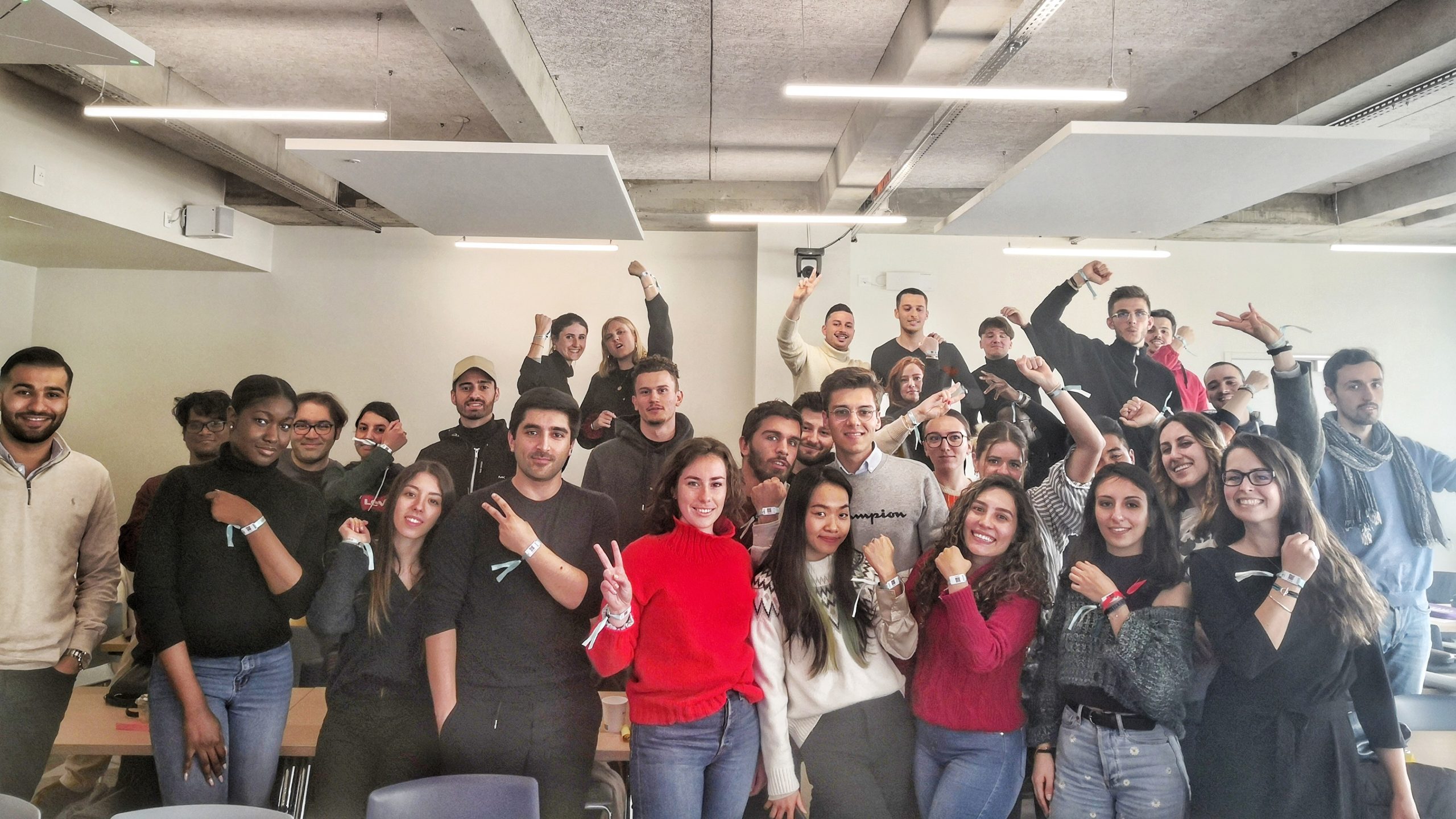
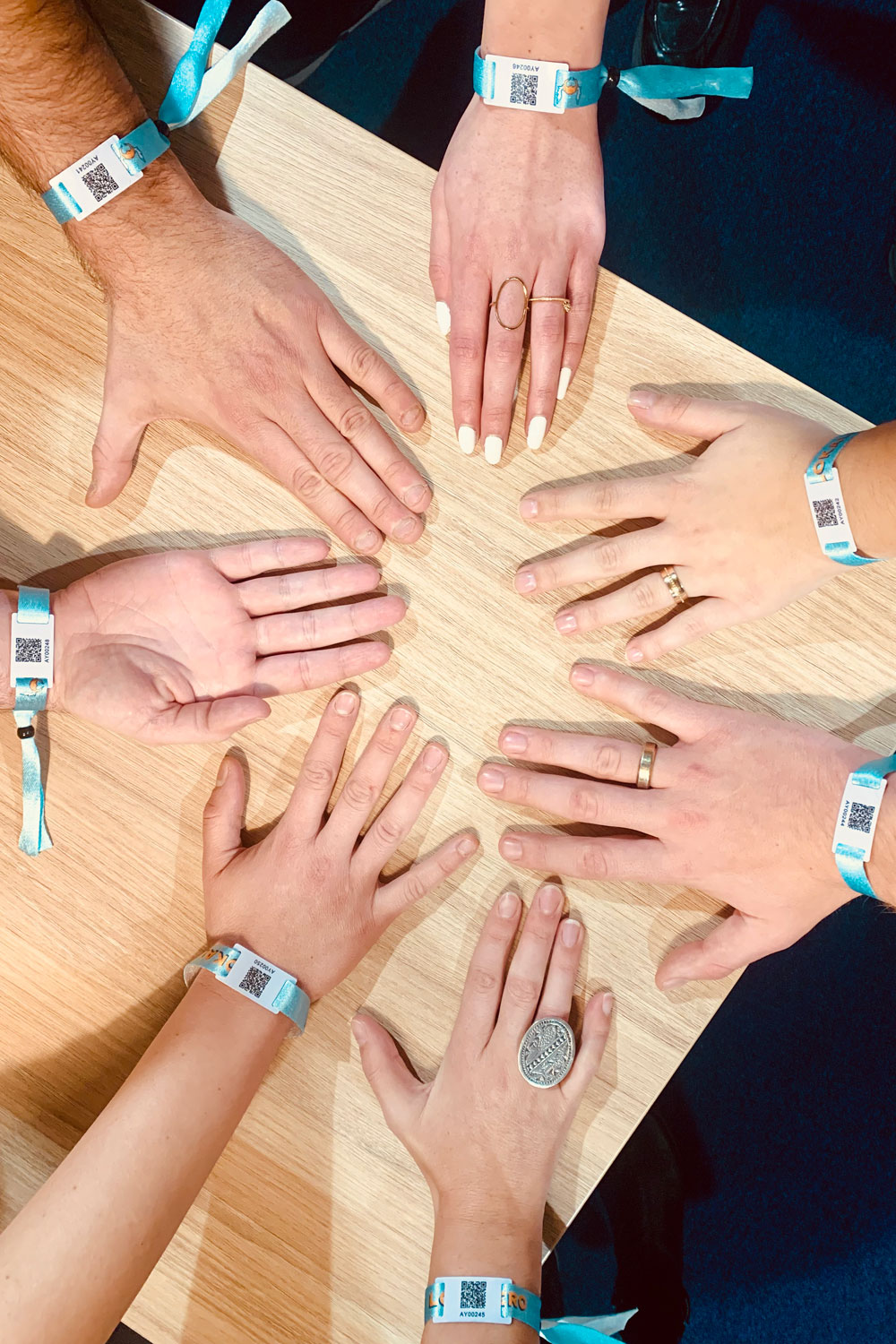
The 42 students enrolled in the Inclusive Entrepreneurship course at the Rouen and Reims campuses used Lokalero connected bracelets to collect donations so that Konstelacio could carry out the Ursino project. The concept is simple and effective: bracelets equipped with QR codes that link directly to the donation collection page. And since Konstelacio loves cooperation, they worked in teams and came up with innovative fundraising and communication strategies.
The Baghdad team demonstrated their creativity during this challenge and won the prize for the most innovative strategy. They granted us an interview.
Introduce yourself in a few lines.
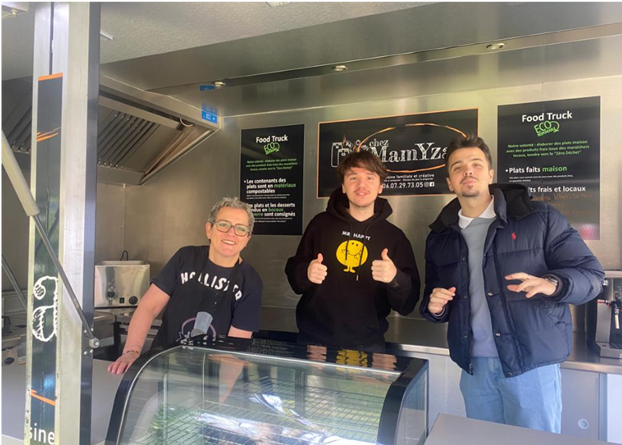
Part of the team at Cantine
- Alexis Vernagallo, I completed a Bachelor's degree at BSB before coming to Neoma for a Master's degree. On the professional side, I recently worked at Unilever as an area manager.
- Alexis Donati: I completed a bachelor's degree at ICN Business School in Nancy before coming to Neoma for my master's degree. I currently work as a business developer.
- Furkan Celik: I am a customer service representative for a renovation company in the Strasbourg area.
- Valerian Cuenin: I am a student entrepreneur and have created two projects: VP Agency, which aims to make digitalization accessible to all businesses.
We also have a service entirely dedicated to aerial photography for anyone looking to boost their communication; andStudent Pass, a discount card for Lille and Reims giving students access to more than 250 immediate discounts. -
Jean Glaser: I am a student at Neoma, and professionally, I have completed internships as a business analyst at consulting firms in Paris.
-
Valentin Turc: I did a bachelor's degree at EM Strasbourg before coming to Neoma for my master's degree. I am developing an app called Safe2Walk to reduce street assaults.
"In general, we are a very enterprising, very athletic group, and we are not afraid to try new things because failure is an important step on the road to success."
What did you think of this educational and charitable challenge?
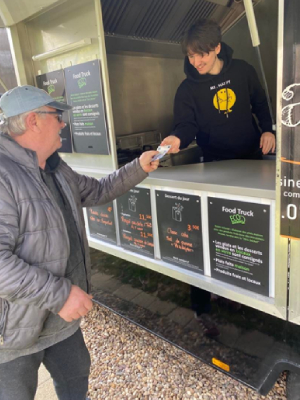
Donation collection mission at Cantine
How did you decide to proceed? Tell us about the strategy you implemented and why it worked.
That's how we set up our final year project called Cantine, offering people the chance to round up their bill while telling them about Lokalero and Konstelacio. It was a huge success, as we raised €30.
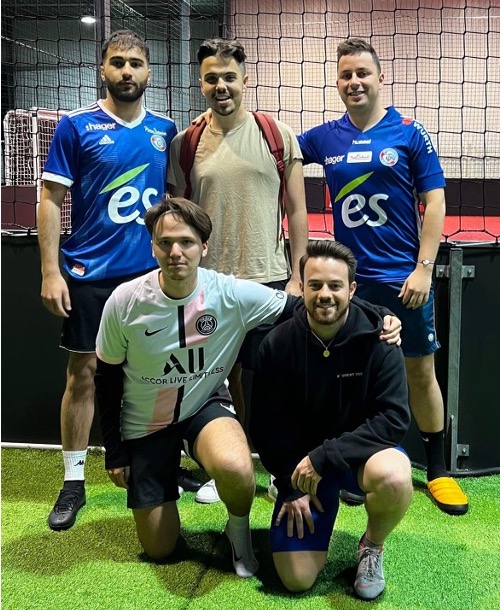
"We also thought of the PSG association, which organizes a training match between players before the foundation's gala. The losing team has to pay the prizes. Of course, they're millionaires, so it's not significant, but we thought that giving money so that others would give would be motivating.
So we played four 5-on-5 games at the LeFive complex in Reims with teams we found on social media. The deal was clear: the losing team had to donate €25 to the charity (€5 per person). The games were close every time, and the simple fact ofdonating to a charity was a source of motivation to win.
The result: €100 raised and four superb victories.
What did you learn about the world of associations through this experience?
"It'sdifficulttoraise money for an association. As we said, we don't sell anything, so even a donation of €10 won't get you anything material. So you have to get people interested in the project without playing on their pity, which is very difficult at first.
In addition, we raised the idea that volunteers must be extremelymotivatedbythe project in order to try to raise money. A salesperson, for example, is motivated by commission or by the approval of their managers, but this is not the case here, so we must aim to ensure that volunteers are well chosen from the outset to be motivated and a source of ideas without expecting any reward.
What makes the bracelets developed by lokalero innovative?
What advice would you give to volunteers who want to get involved in this type of collection?
What did this experience bring you professionally and personally? What will you take away from this experience?
What do you think about the role that business schools have to play in the social and solidarity economy and the non-profit sector?